
Guidance, Navigation, and Control
“The missile knows where it is at all times. It knows this because it knows where it isn’t.” Attributed to a U.S. missile guidance training film

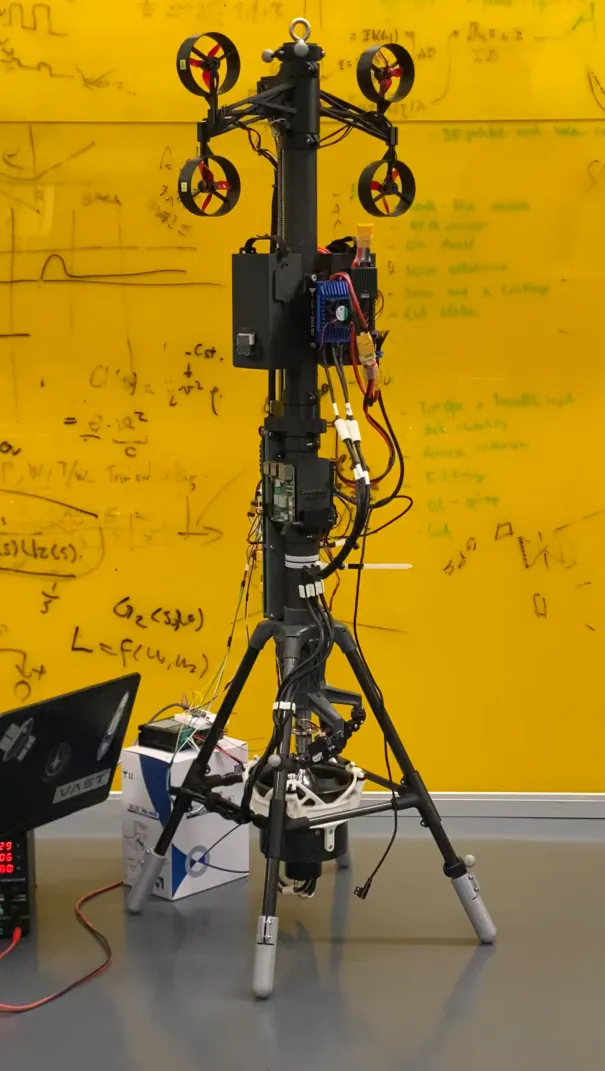
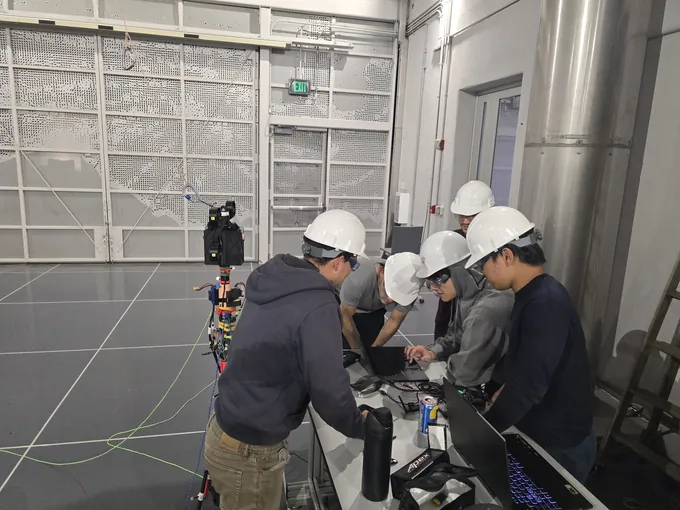
Landing a rocket is a controls problem before it is anything else: estimate where you are, decide where you need to be, and command the engine and actuators to close the gap — hundreds of times per second, all the way to the ground. Our philosophy is testbed first. Every estimator, guidance law, and control loop destined for Icarus racks up flight time on our Daedalus drone testbeds, where a bad day costs a propeller instead of a rocket.
Daedalus2 is our operational self-landing testbed — the successor to the original Daedalus, now retired. Daedalus3 carries a Jetson Orin Nano onboard, giving us the compute to test reinforcement-learning-based control in flight. And Daedalus Diver goes after the hardest maneuver in the business: the belly flop — falling broadside to bleed off energy, then flipping upright to land propulsively, the way Starship does it.
Team interests
- Flight and ground station software
- State estimation and sensor fusion
- Trajectory optimization
- Reinforcement learning for control
- Simulation and hardware-in-the-loop testing
Responsible engineers
Projects
Retired
Daedalus
The original flight testbed — retired in favor of Daedalus2, which has less slop in its TVC system and a more mature electrical system.
Operational
Daedalus2
Our self-landing drone controls testbed — where the GNC stack earns its flight hours and its propulsive touchdowns.
In development
Daedalus3
Next-generation testbed carrying a Jetson Orin Nano — compute headroom for heavier estimation and for testing RL-based control in flight.
In development
Daedalus Diver
A drone testbed built to investigate and pull off the belly-flop maneuver — broadside descent, flip, and propulsive landing.